Three different things, not three versions of the same thing
Couples therapy is a treatment led by a trained therapist. AI support is a tool for thinking and preparing between conversations. Everyday exercises are practice in what you already do daily.
Most couples don't have to choose once and for all. Usually one route simply fits best right now.
Online couples therapy
Video-based couples therapy makes it easier to find times that work for two people, and there's no travel. It requires that you both want it, that you can sit undisturbed, and that someone actually books it.
Check that the therapist is licensed, what a session costs, and how many sessions are usually needed. Ask how they work, too: structure and method vary more than people expect.
- Fits when you're stuck in the same conflict despite repeated attempts.
- Fits after infidelity, a crisis, grief, or a major decision you can't move past.
- Requires time, money, and both of you taking part.
AI support between sessions
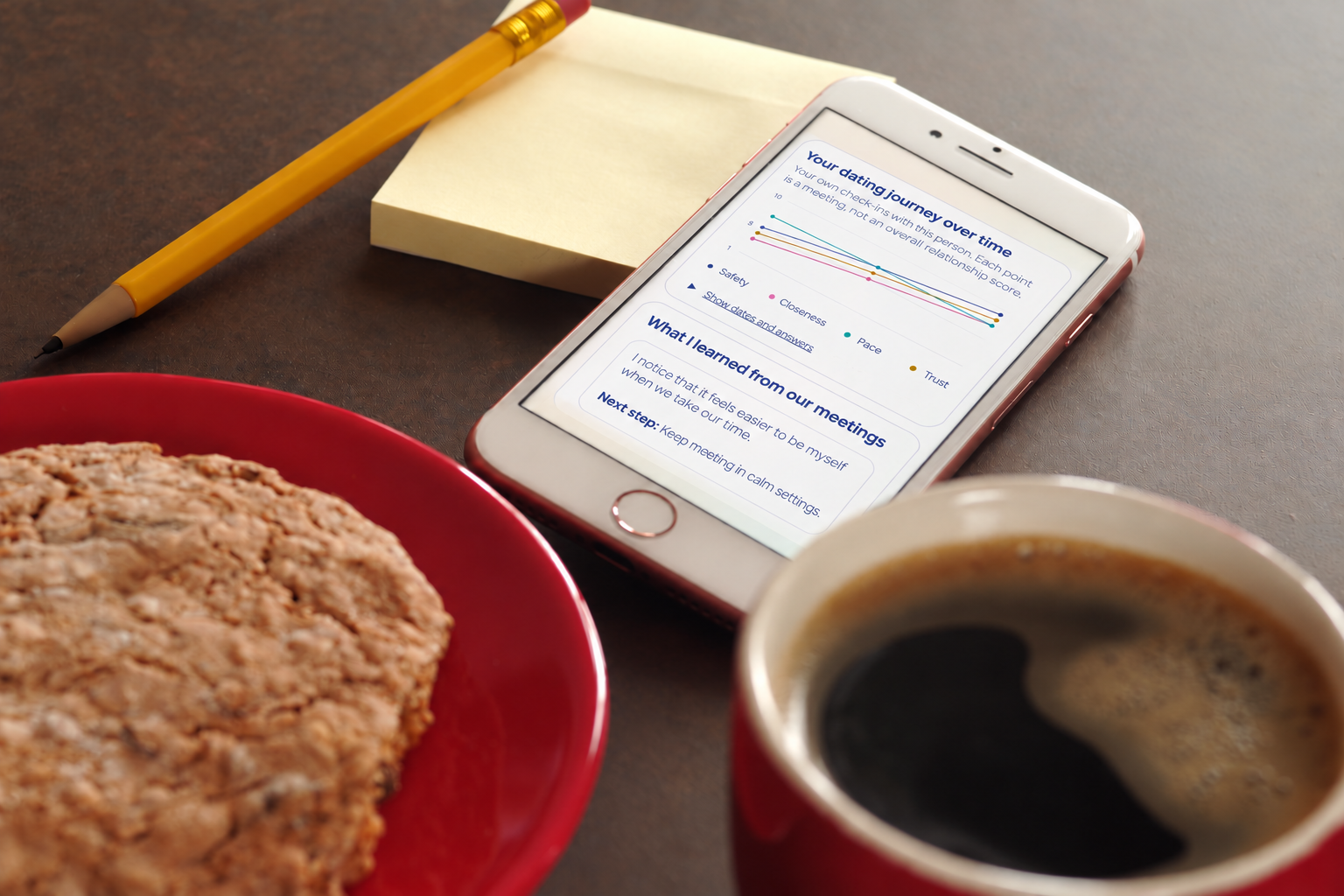
AI support doesn't replace therapy, but it is there when the question actually shows up: late at night, before a difficult conversation, or when you want to understand your own reaction before raising something.
Aivelyn Relation starts with each of you doing your own self-insight. It then shows what you have in common and where you differ, with no scores or predictions, along with an exercise you can do yourselves or let Evelyn guide. Your private notes are never shared with the other person.
How to choose
A simple rule of thumb: if it's an acute crisis or a recurring pattern that hurts, start with therapy. If it's about distance, pace, irritation, or having stopped talking about anything but logistics, start with structure in everyday life.
You can also do both. Many couples find that therapy sessions get more concrete when they arrive with something they've already reflected on at home.
When it isn't a choice
Where there is violence, threats, control, or fear, joint couples therapy is not the right first step, and an AI tool certainly isn't. Seek help for yourself.
In Sweden, call 112 in an emergency. Kvinnofridslinjen, 020-50 50 50, is open around the clock and the call doesn't appear on your phone bill. Elsewhere, contact your local emergency number or domestic-abuse helpline.